
Making Ten Worksheets
These free printable Making 10 worksheets, also called number bonds to 10, help students learn which pairs of numbers add up to 10 (like 4 + 6, 7 + 3, and 8 + 2). Knowing these combinations is a key mental math skill that makes addition, subtraction, and regrouping much easier later on.
Looking for more mental math practice at your child's level? Try our Doubles & Near Doubles Worksheets or generate a custom Addition Worksheet with your own number range.
You are browsing category Making 10 show all
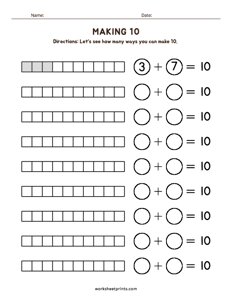
Making 10 Worksheet - #3
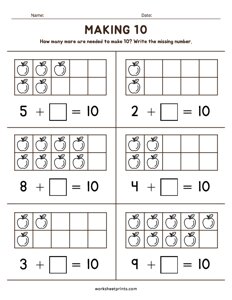
Making 10 Worksheet - #5
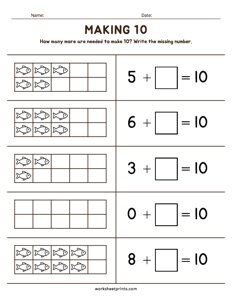
Making 10 Worksheet - #8
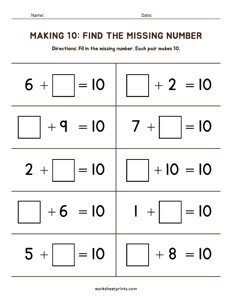
Making 10 Worksheet - #2
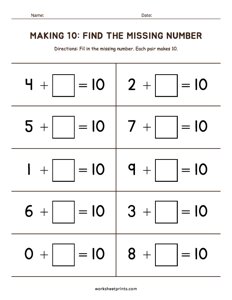
Making 10 Worksheet - #1
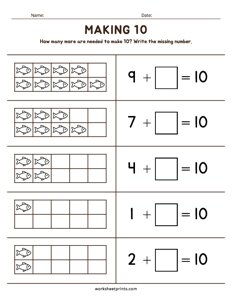
Making 10 Worksheet - #4
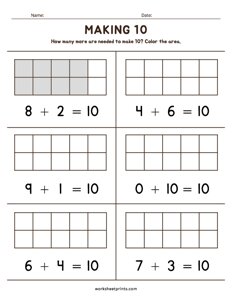
Making 10 Worksheet - #7
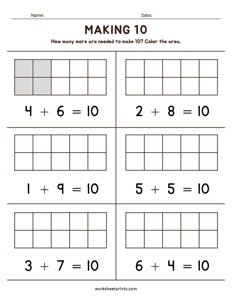
Making 10 Worksheet - #6
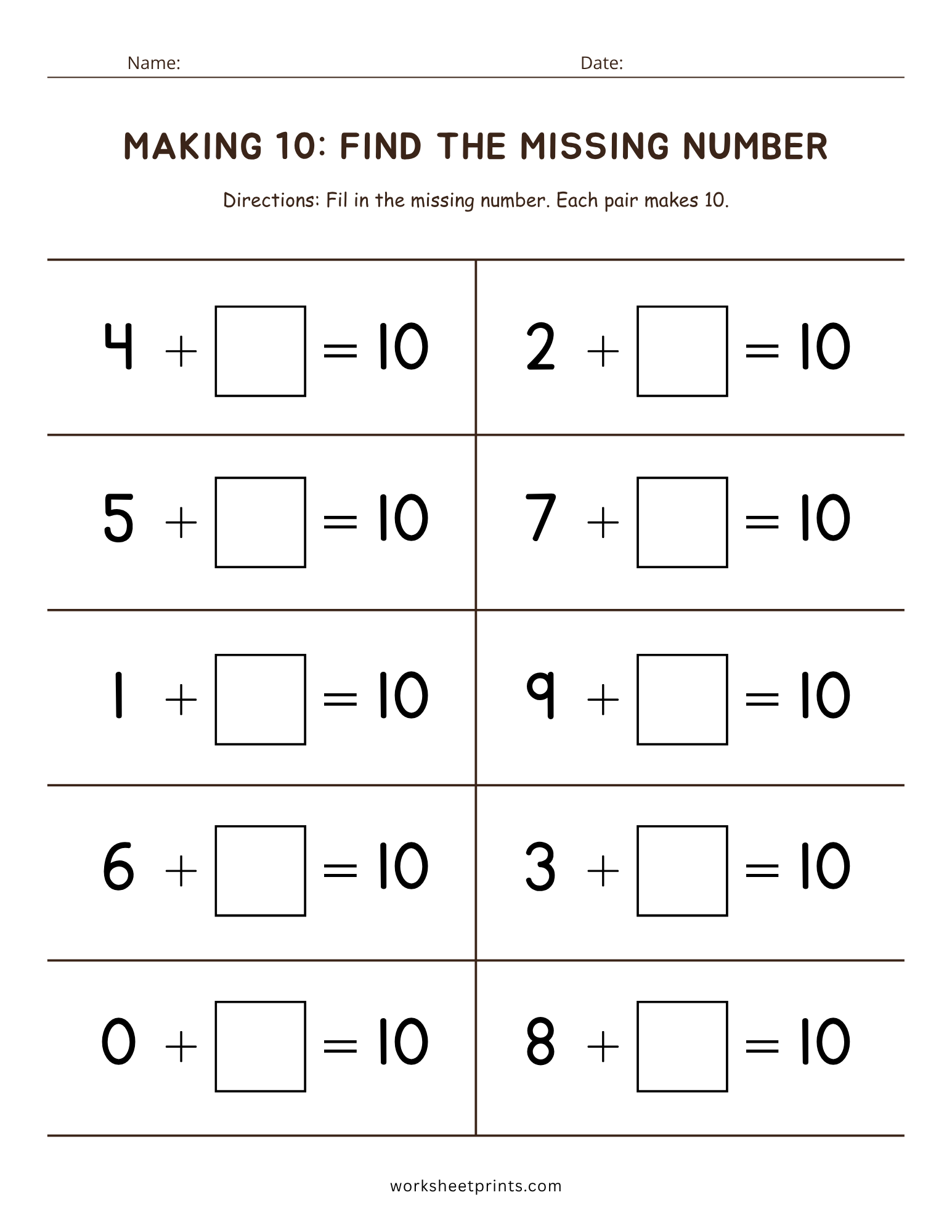
Why is Making 10 important?
When a student quickly knows that 6 + 4 = 10, they can use this as a shortcut for tougher problems. For example, to solve 6 + 7, they might think, "6 + 4 = 10, then add 3 more to get 13."
This approach, called "bridging through ten," is a key skill for mental addition, subtraction, and later for understanding place value and regrouping in two-digit addition.
Frequently Asked Questions
What age should kids learn Making 10?
Most students begin learning making-10 strategies in kindergarten and 1st grade, alongside basic addition facts.
How is Making 10 different from doubles facts?
Doubles facts, such as 6+6, involve adding a number to itself. Making 10 is about finding any two numbers that add up to 10. Both are mental math shortcuts, but they help with different number patterns.
Related practice:
- Doubles & Near Doubles - another key mental math strategy
- Mental Addition & Subtraction - mixed practice combining strategies
- Missing Addend Worksheets - practice finding the missing number in an equation, a close cousin skill
- 2-Digit Addition with Regrouping - where Making 10 skills get applied directly
