
2-Digit Addition Worksheets
Our 2-digit addition worksheets help kids practice adding two-digit numbers together, both without regrouping and with regrouping. No-regrouping problems build confidence with place value first; regrouping (carrying) problems then extend that understanding to more complex sums, a core skill for 1st and 2nd grade math.
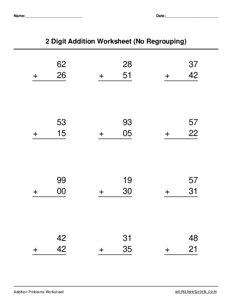
2-digit addition (no regrouping) - #5
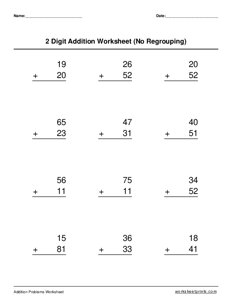
2-digit addition (no regrouping) - #4
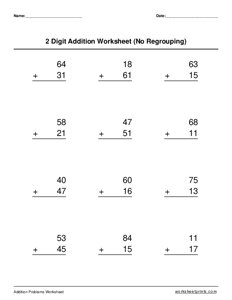
2-digit addition (no regrouping) - #3
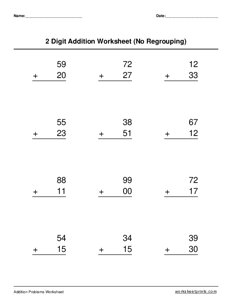
2-digit addition (no regrouping) - #2
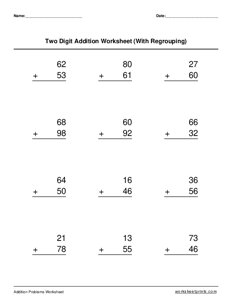
2-digit addition (with regrouping) - #9
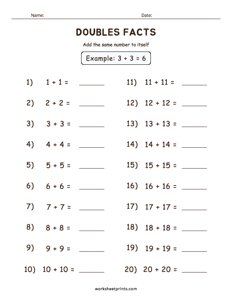
Mental Math - Doubles and Near Doubles - #1
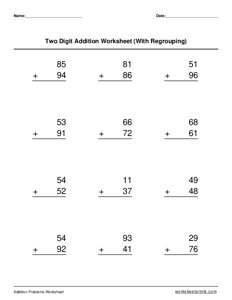
2-digit addition (with regrouping) - #3
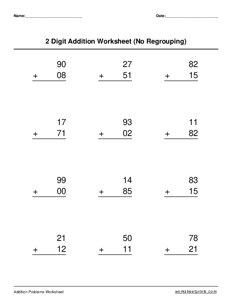
2-digit addition (no regrouping) - #1
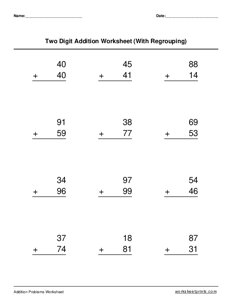
2-digit addition (with regrouping) - #4
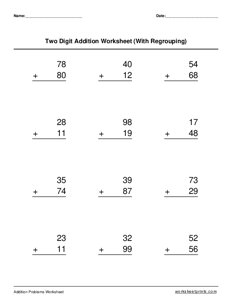
2-digit addition (with regrouping) - #6
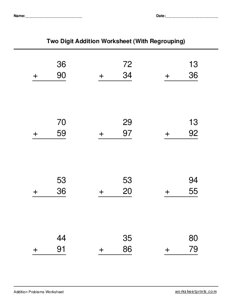
2-digit addition (with regrouping) - #10
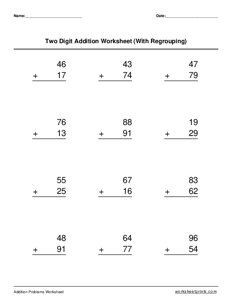
2-digit addition (with regrouping) - #8
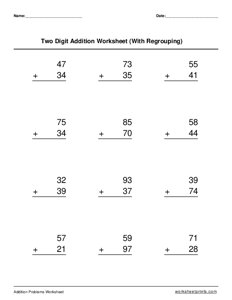
2-digit addition (with regrouping) - #1
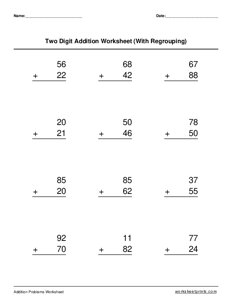
2-digit addition (with regrouping) - #5
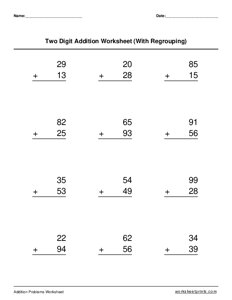
2-digit addition (with regrouping) - #2
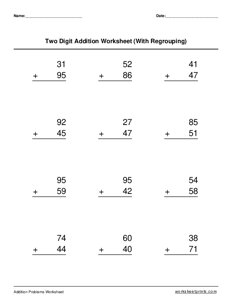
2-digit addition (with regrouping) - #7
Once your child is comfortable with 2-digit addition, the natural next step is addition and subtraction mixed together, which builds the flexibility to recognize which operation a problem calls for. If more repetition is needed first, our 1-digit and 2-digit addition worksheets are a good stepping stone.
2-Digit Addition FAQ
What is regrouping in 2-digit addition?
Regrouping (also called carrying) happens when adding a column of digits results in a value of 10 or more. The extra ten gets carried over to the next column. For example, adding 27 + 15, the ones column (7 + 5 = 12) requires carrying a 1 into the tens column.
Why is place value important for 2-digit addition?
Understanding that a 2-digit number is made up of tens and ones helps kids correctly line up and add each column. Without a solid grasp of place value, regrouping problems in particular can become confusing, since kids need to understand what's actually being carried.
How many 2-digit addition problems should my child practice at once?
A worksheet or two per session, a few times a week, is usually enough for steady progress. Consistent short practice tends to build stronger retention than infrequent, longer sessions.
