
Mental Math Worksheets
Mental math worksheets help kids solve problems in their heads, without relying on paper or a calculator. Building this skill starts with strategies like doubles and near doubles and making 10, and grows to include skip counting tricks and rounding and estimation. These skills speed up everyday math and build number confidence far beyond what memorization alone provides.
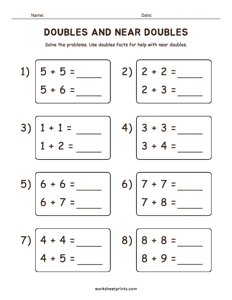
Mental Math - Doubles and Near Doubles - #7
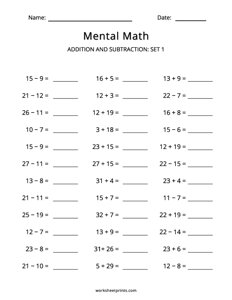
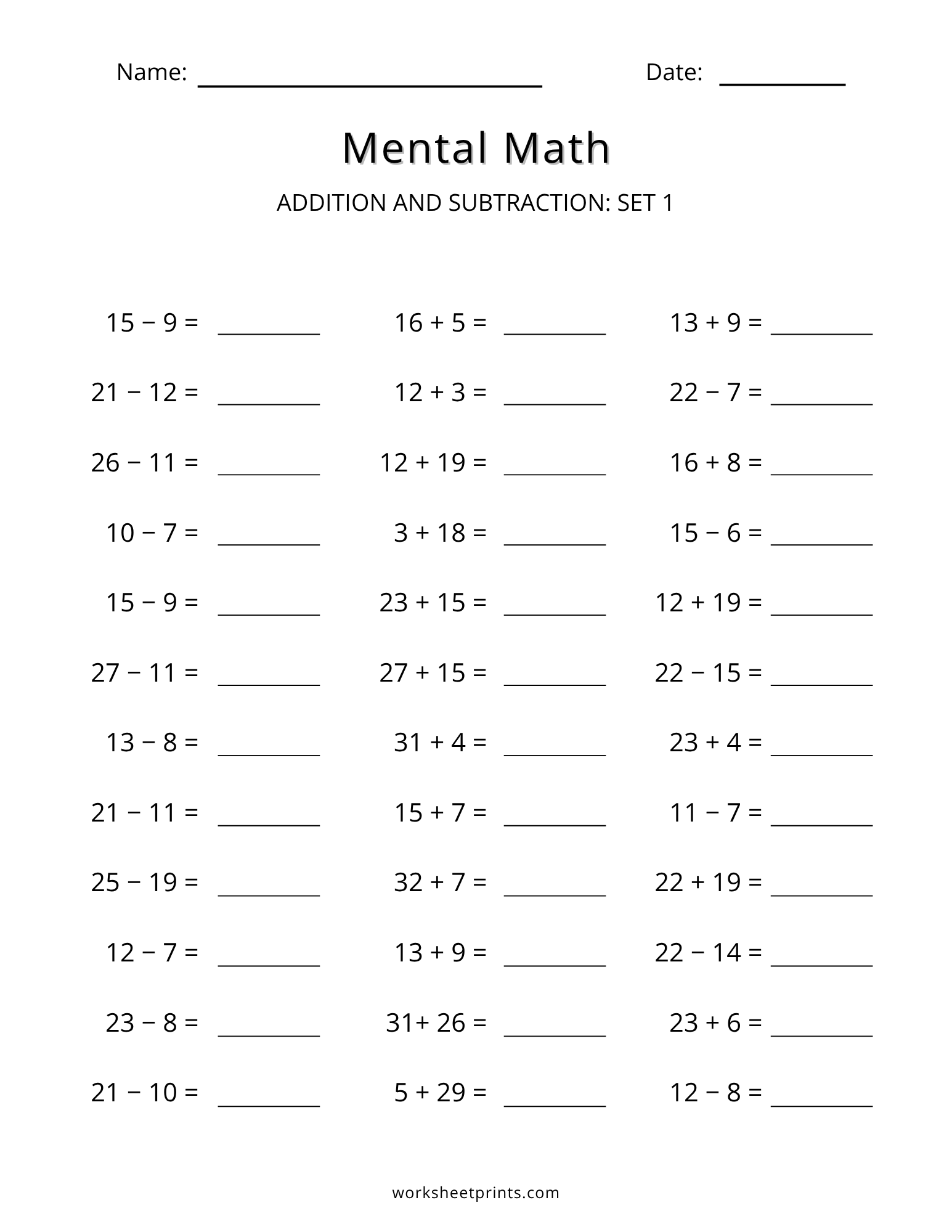
Mental Math - Addition and Subtraction - #1
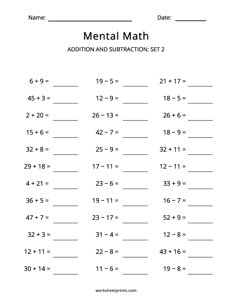
Mental Math - Addition and Subtraction - #2
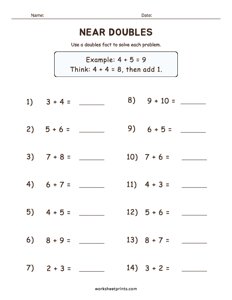
Mental Math - Doubles and Near Doubles - #2
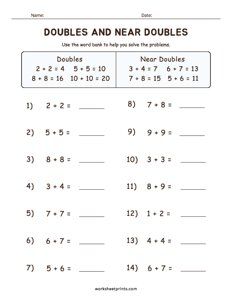
Mental Math - Doubles and Near Doubles - #3
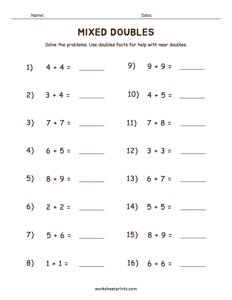
Mental Math - Doubles and Near Doubles - #4
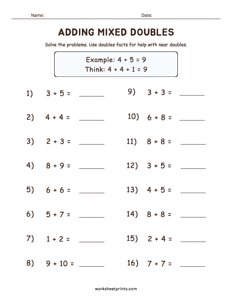
Mental Math - Doubles and Near Doubles - #5
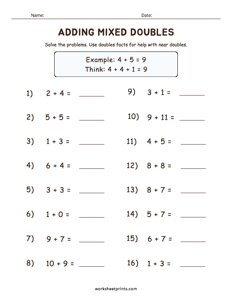
Mental Math - Doubles and Near Doubles - #6
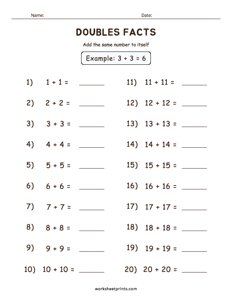
Mental Math - Doubles and Near Doubles - #1
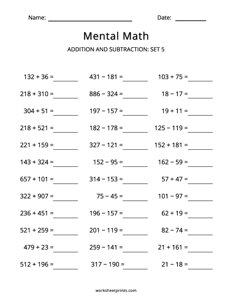
Mental Math - Addition and Subtraction - #5
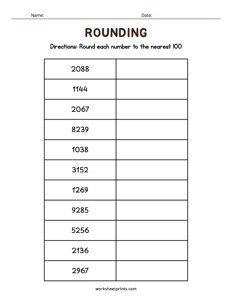
Estimating & Rounding Worksheet - #4
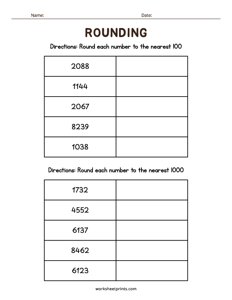
Estimating & Rounding Worksheet - #5
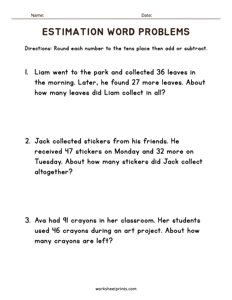
Estimating & Rounding Worksheet - #7
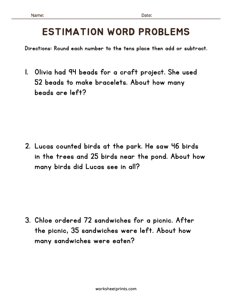
Estimating & Rounding Worksheet - #8
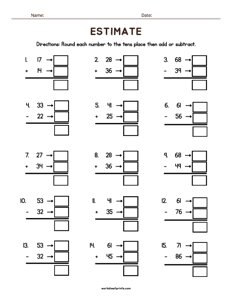
Estimating & Rounding Worksheet - #2
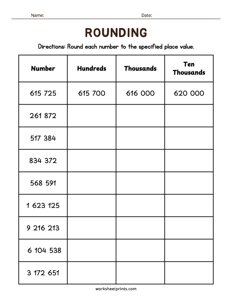
Estimating & Rounding Worksheet - #6
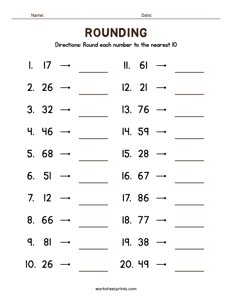
Estimating & Rounding Worksheet - #3
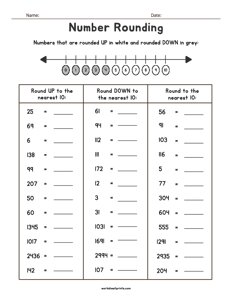
Estimating & Rounding Worksheet - #1
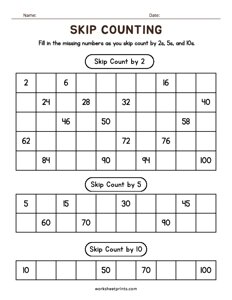
Mental Math - Skip Counting - #1
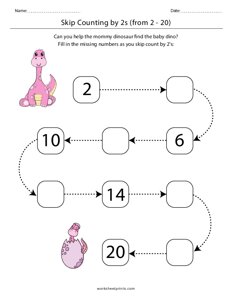
Skip Counting by 2s (0-20)
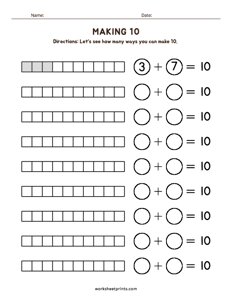
Making 10 Worksheet - #3
Key Mental Math Strategies
- Doubles Facts: Knowing that 4+4=8 helps solve 4+5 quickly (just add 1 more).
- Making 10: Recognizing number pairs that add to 10 (like 7+3) makes it easier to solve bigger problems by breaking them into friendlier chunks.
- Counting On/Back: Instead of starting from zero, starting at the larger number and counting forward (or backward for subtraction) is faster and more efficient.
- Compensation: Rounding one number to make the math easier, then adjusting the answer (e.g., 49+25 becomes 50+25−1).
- Skip Counting: Counting by 2s, 5s, or 10s builds the foundation for fast mental multiplication.
Explore Mental Math by Strategy
Doubles & Near Doubles
Our doubles and near doubles worksheets help kids memorize doubles facts and use them as a mental shortcut for related problems, a technique that pairs well with addition practice.
Making 10
Making 10 worksheets build one of the most useful mental math strategies kids will use throughout elementary math, recognizing number pairs that combine to make a friendly, round number.
Skip Counting Tricks
Our skip counting worksheets build the foundation for mental multiplication, connecting directly to repeated addition and later times tables.
Rounding & Estimation
Rounding and estimation worksheets teach kids to quickly approximate an answer, a practical skill for checking whether a calculated answer seems reasonable.
Mental Math FAQ
What is mental math and why does it matter?
Mental math means solving problems in your head, without writing anything down. It builds number fluency and confidence, and it's a practical everyday skill, useful for quick estimates while shopping, cooking, or checking whether a written answer makes sense.
When should kids start learning mental math strategies?
Most mental math strategies build on skills kids already have by 1st or 2nd grade; comfortable single-digit addition and subtraction is usually a good starting point before introducing formal strategies like making 10 or doubles facts.
How is mental math different from just memorizing facts?
Memorization means recalling an answer instantly (like knowing 7+8=15 by heart). Mental math strategies give kids a way to figure out answers they haven't memorized yet, using logical shortcuts; both skills work together, and mental math strategies often help facts become memorized faster.
What's a simple way to practice mental math at home?
Asking quick, low-pressure questions during everyday moments, like adding up grocery items or figuring out how much time is left before dinner, gives kids informal practice without it feeling like a worksheet.
