
More or Less Worksheets for Kindergarten
Which group has more? Which has fewer? Kids count, compare, and circle the answer! These free printable sheets make comparing fun and easy. Just pick one, print it, and go.
Looking for more early math? Visit all our Kindergarten Math worksheets.
You are browsing category More or Less show all
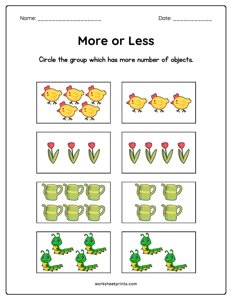
Circle More Than or Fewer Than - #9
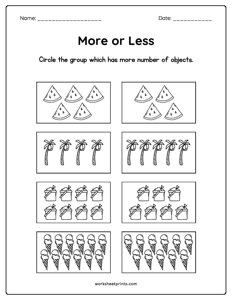
Circle More Than or Fewer Than - #8
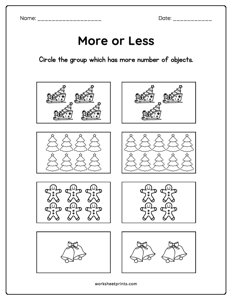
Circle More Than or Fewer Than - #5
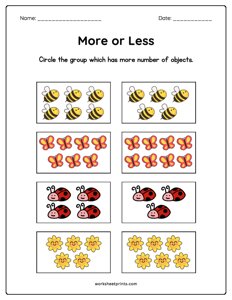
Circle More Than or Fewer Than - #7
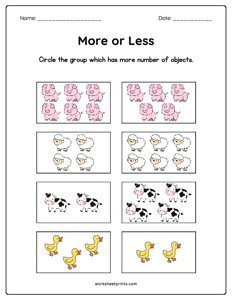
Circle More Than or Fewer Than - #11
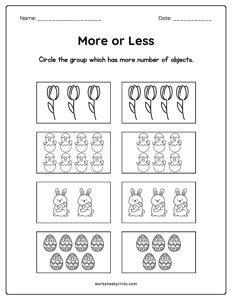
Circle More Than or Fewer Than - #10
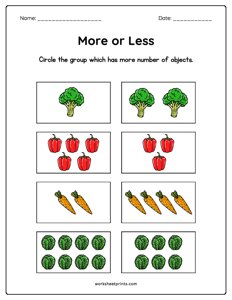
Circle More Than or Fewer Than - #2
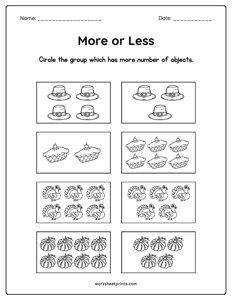
Circle More Than or Fewer Than - #3
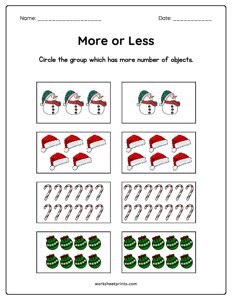
Circle More Than or Fewer Than - #6
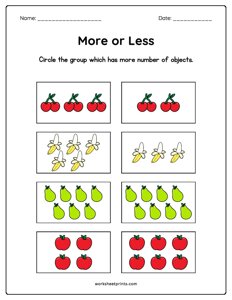
Circle More Than or Fewer Than - #1
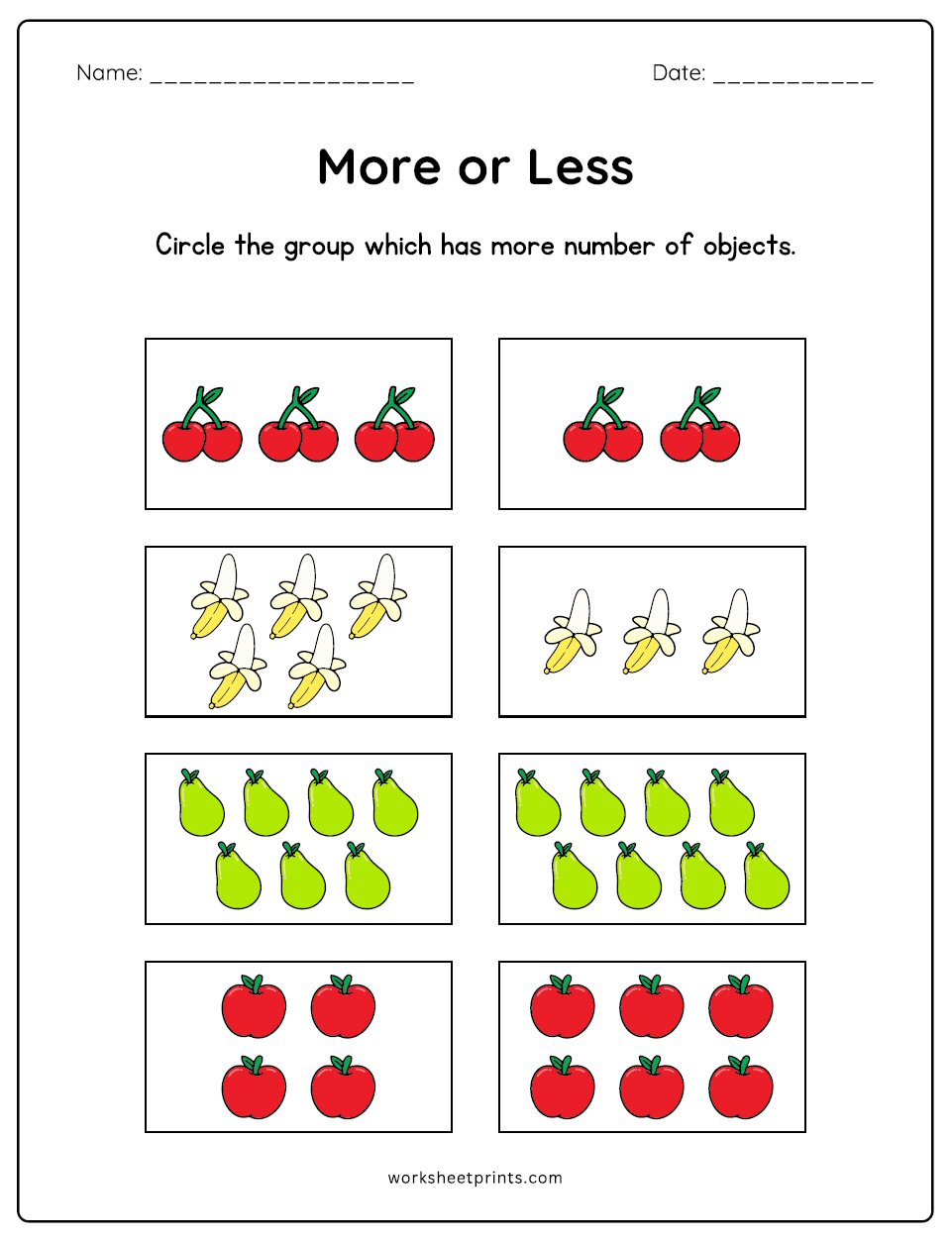
What Do "More" and "Fewer" Mean?
Comparing means looking at two groups and deciding how they are different.
More
A group with more has a bigger number of things. If one group has 5 apples and the other has 3, the group with 5 has more.
Fewer (or Less)
A group with fewer has a smaller number of things. The group with 3 apples has fewer. Some people say "less", and that works too.
A Simple Way to Compare
Line up the items in two rows, side by side. The row that keeps going has more. The row that stops early has fewer.
Our Circle More or Fewer Worksheets
Circle More Than or Fewer Than
Each sheet shows two groups of pictures. Kids count them and circle the group that has more or fewer. Use them for morning work, homework, or a quick math center. Two of the sheets have a winter theme, and you can find more like them in Winter Counting.
Ready for Bigger Numbers?
When your child feels confident, try comparing written numbers. Our Comparing Numbers worksheets and More or Less number worksheets are a good next step.
Why Is Comparing Important?
It Builds Number Sense
Kids learn that numbers stand for real amounts, not just symbols on a page.
It Helps With Counting
To compare two groups, kids have to count carefully. Practice more with Counting worksheets.
It Prepares Kids for Adding and Subtracting
Understanding more and fewer makes Addition and Subtraction easier later.
Easy Ways to Practice at Home or in Class
Use Real Objects
Put 4 blocks on one side and 6 on the other. Ask, "Which side has more?"
Play the Snack Game
Give your child two small piles of crackers. They can choose the pile that has more and eat it!
Talk It Out
Ask, "How do you know?" Kids learn best when they explain their thinking.
Keep It Short
One sheet a day is enough. Praise their effort and keep it happy.
Frequently Asked Questions
What age should kids learn more and fewer?
Most children learn to compare groups in kindergarten, around ages 5 and 6. Some start earlier with objects at home.
What is the difference between "fewer" and "less"?
Both mean not as many. For young kids, you can use either word. Fewer is used for things we can count, like apples. Less is used for things we can't count one by one, like water.
My child gets mixed up. What can I do?
Go back to real objects like toys or blocks. Let your child match them one to one, then try the worksheet again.
Are these worksheets free?
Yes! You can download and print as many as you need for home or class.
Can I make my own worksheet?
Yes! Try our worksheet generator to make one that fits your child.
More Free Kindergarten Math Worksheets
- Early Math Worksheets
- Even & Odd Worksheets
- Patterns Worksheets
- Count Up to 5
- Count Up to 10
- Math Flashcards
- Workbooks
Pick a sheet, print it, and let the comparing begin!
